
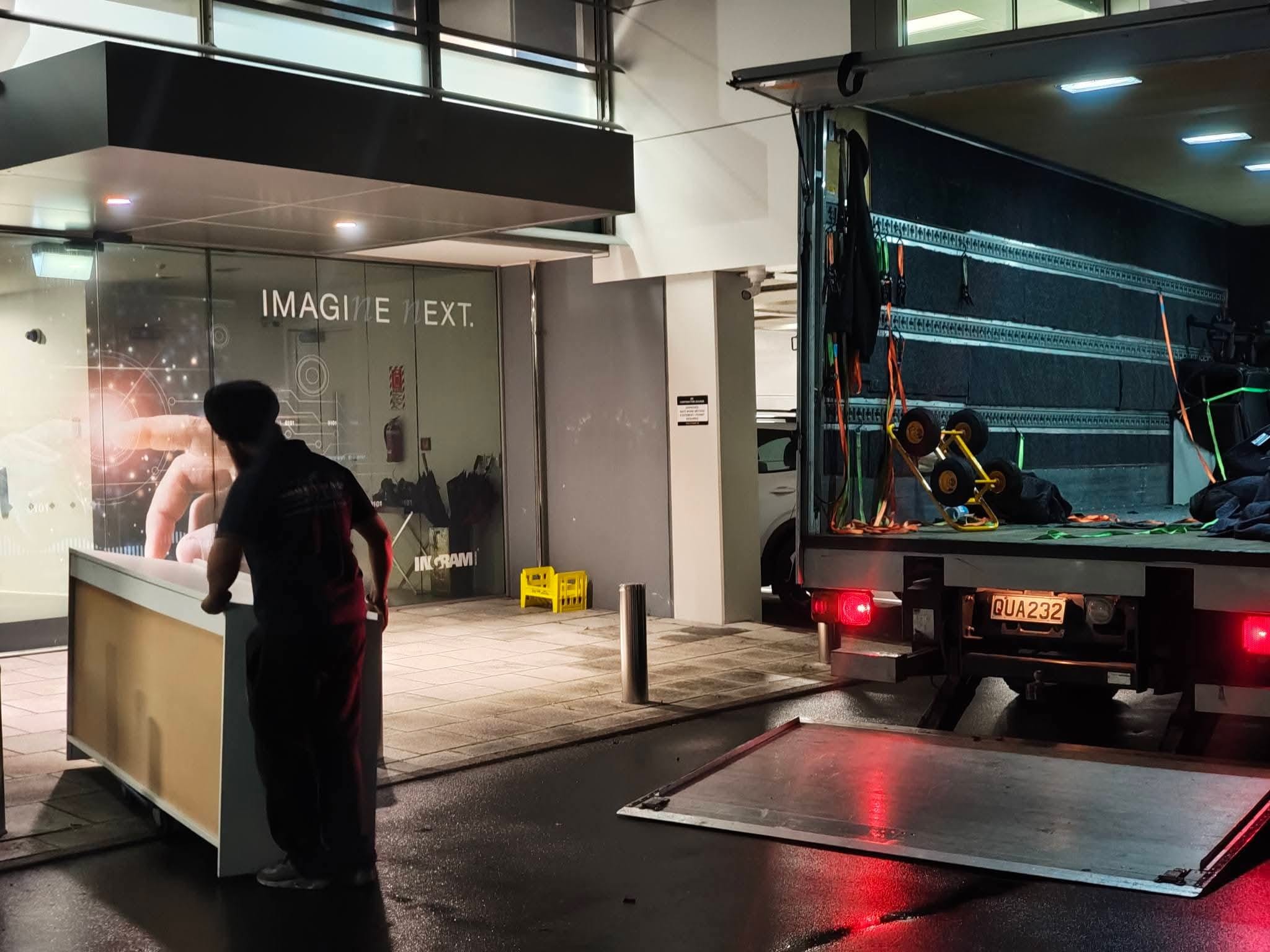
The answer to how long an office relocation takes depends on the size and complexity of your move. A small office may be emptied in one day, while a larger business can need several days for the physical move and many weeks of preparation.
Your timeline changes with staff numbers, furniture volume, technology requirements, travel distance, and building access. At Big Bull Commercial, we help Auckland businesses plan these details so their move is organised and downtime is kept to a minimum.
How Long Does It Take to Move an Office?
When estimating an office move, the size of the team is a useful starting point. The physical move is only one part of the project; IT setup, packing, access bookings, and reinstatement also need to be allowed for.
Small offices: usually one day
For a small team with a handful of desks, limited storage, and easy truck access, the physical relocation can usually be completed within a single day. Preparation should still begin three to four weeks beforehand.
Medium offices: one to three days
Medium offices have more workstations, chairs, filing cabinets, and computer equipment to uninstall and reinstall. These moves commonly take one to three days, particularly where the new office needs IT equipment and workstations ready before staff return.
Large or complex offices: three to five days
Businesses spread across multiple floors, with heavy boardroom tables, large storage areas, or server rooms, may need three to five days for the physical relocation. Allow several weeks, and often several months, of planning before moving day.
What Affects an Office Relocation Timeline?
If you are asking how long an office move takes in Auckland, the finer details matter. These factors can speed up a move or slow it down.
- Office size and staff numbers: More people generally means more desks, computers, storage, and personal items to move.
- Furniture and equipment: Boardroom tables, steel filing cabinets, fridges, safes, and other heavy items take more time and planning than standard office chairs.
- Technology: Networks, computers, phones, and servers must be shut down, protected, transported, and reconnected carefully.
- Building access: Shared lifts, tight stairwells, loading docks, parking rules, and lift bookings can all affect the schedule.
- Travel distance: A short local move may allow multiple truck trips in one day, while a longer trip across Auckland takes more time.
- Packing and labelling: Packed, clearly labelled items that are ready near the loading area can be moved much faster.
- Special items: Heavy safes, laboratory equipment, or complex machinery may require specialist lifting equipment and additional handling time.
How Far in Advance Should You Plan an Office Relocation?
Moving day and the planning period are two different timeframes. Even for a small office, start planning three to four weeks before the move. This gives you time to confirm dates, arrange building access, notify staff, and book an experienced office moving company.
For a medium or large office, allow several weeks to a few months. Businesses with multiple levels, high-tech equipment, or specific machinery should ideally begin preparations three to six months ahead. More lead time makes it easier to coordinate staff, building management, IT professionals, and movers.
A Simple Office Relocation Timeline
Four to twelve weeks before moving day
- Confirm the new office and choose your moving date.
- Audit what is moving, being sold, donated, or disposed of.
- Engage professional office movers and create a moving plan.
- Finalise the new-office floor plan and discuss internet and IT requirements.
- Check parking, loading-dock, and lift rules for both buildings, then notify employees.
One to two weeks before moving day
- Pack items that are not used every day and clearly label boxes, desks, and departments.
- Confirm final times with your movers and prepare sensitive equipment for transport.
- Reconfirm lift and parking bookings, and arrange protection for floors and walls where required.
Moving day and the first day back
- Load furniture and equipment safely, then transport it to the new premises.
- Place heavy furniture according to the floor plan and prioritise essential equipment.
- Set up workstations, computers, phones, and network equipment.
- Walk through the office, resolve missing cables or minor issues, and get your team back to work.
How to Reduce Downtime During an Office Move
Time is money during a commercial move. Careful preparation can make the time lost to an office relocation as short as possible.
- Plan ahead: A detailed plan avoids last-minute problems and expensive delays.
- Complete an inventory: Knowing exactly what is moving helps you arrange the right crew, trucks, and equipment.
- Label everything clearly: Use department names, employee names, or new-room numbers so every item reaches the correct place.
- Coordinate with IT: Match computer shutdown and reconnection with the moving schedule.
- Move in stages where possible: A phased move can keep part of the business operating while another department relocates.
- Use experienced commercial movers: Professional commercial movers in Auckland handle heavy furniture and difficult building access efficiently.
For more practical ways to keep operations running, read our guide on minimising downtime during a business relocation.
Can an Office Move Be Completed in One Day?
A one-day move is realistic for a small, well-prepared office. For larger businesses, trying to complete everything in one day is not always the best approach. Consider the office size, furniture volume, IT requirements, and travel distance before committing to that schedule.
If your business cannot close completely, a phased relocation is often safer. Moving one department at a time can keep customer service and core operations running while the rest of the office is moved.
Why Work With Big Bull Commercial?
Big Bull Commercial specialises in business relocations. Our office moving services cover heavy furniture moving, workstation setup, careful equipment loading, packing support, commercial transport, and relocation planning. We work to reduce downtime and help your team return to normal operations quickly.
Frequently Asked Questions
How long does a commercial office move take?
A small office can often be packed and moved in one day. A medium or large office commonly takes two to four days to pack, load, transport, and unpack, depending on its layout, access, and technology needs.
How early should I plan an office move?
Plan four to twelve weeks before the moving date, depending on the size and complexity of the relocation. Large offices and specialist moves benefit from even more lead time.
Can an office move happen overnight or on a weekend?
Yes. Many businesses choose overnight or weekend moves to avoid interrupting normal working hours.
Can a business stay open during an office relocation?
Yes. With a phased moving plan and a clear schedule, one part of the business can remain operational while another department moves.
Plan Your Auckland Office Move With Confidence
There is no single timeframe for every relocation: a small office might move in an afternoon, while a larger commercial move needs days of physical work and weeks of planning. Preparation, clear labelling, early IT setup, and an experienced moving team are the fastest route to a smooth transition.
If you are planning an Auckland office move, contact Big Bull Commercial to discuss your timeline and reduce unnecessary downtime.