
Dedicated Project Manager
You get one main point of contact from start to finish. Your project manager plans every detail, answers your questions, and stays on site to direct the crew until the job is done.
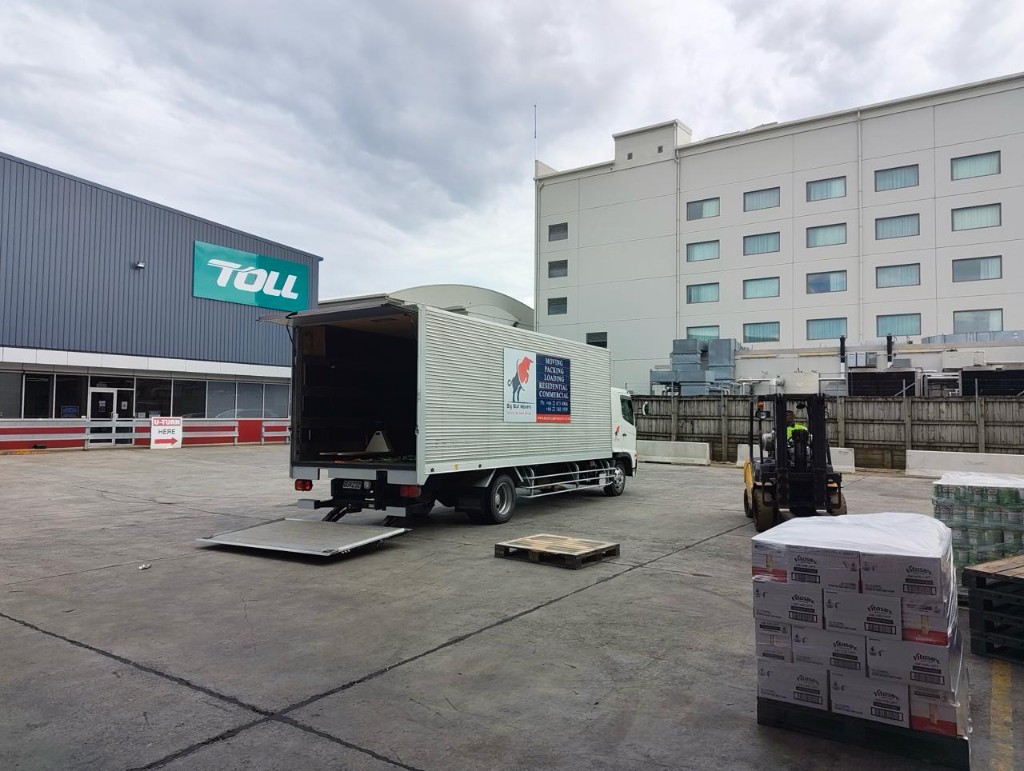
Moving your warehouse doesn't have to stop your daily work. As trusted warehouse movers in Auckland, Big Bull Commercial helps you in moving your stock, racking, and machinery quickly and safely. We work on weekends also so your business stays open and keeps operating.
Fixed-Price Quotes — No hidden costs or surprise hourly fees on move day.
100% Operational by Monday — We move you over the weekend with zero business disruption.
Permanent Trained Crews — No casual day labor. Only experienced, uniformed staff.
Tell us about your move — we'll respond within 1 business hour.
No spam. Used only to prepare your quote.
Moving a warehouse is very different from moving a house. You have heavy stock, tall storage racks, and strict delivery times. When comparing options for commercial moving Auckland wide, smart business owners choose us because we focus on keeping your operations running smoothly.
You get one main point of contact from start to finish. Your project manager plans every detail, answers your questions, and stays on site to direct the crew until the job is done.
We work around your operational hours. Most of our client moves happen between Friday evening and Sunday night. Your staff finishes work on Friday at the old site and starts work on Monday morning at the new one.
We never hire casual workers or day labor for industrial moves. Every team member is a permanent employee trained in heavy lifting, site safety, truck loading, and asset protection.
We know Auckland industrial areas inside and out. From narrow access drives in Penrose to large logistics parks in Highbrook, our drivers and movers handle local road rules and site access easily.
We visit your site, measure your volume, and give you a written fixed price. The price we quote is the exact price you pay—guaranteed.
Whether you need to shift a small storage unit or a multi-floor distribution center, our warehouse relocation services cover every part of your move.
Storage racks are the backbone of your warehouse. Our crew carefully unbolts your heavy-duty pallet racking, packs it securely for transport, and reassembles it at your new building according to your exact floor plan.
Moving heavy factory equipment requires special tools and experience. Our team works as skilled machinery movers Auckland companies trust to shift lathes, engineering tools, and manufacturing units without damage.
Lost inventory costs time and money. Before moving a single box, we label and map your stock shelves. We move your goods in order so every item ends up on the correct shelf at the new site.
When moving full factory lines, we act as reliable industrial machinery movers. We utilize forklifts, hydraulic lifts, and heavy trucks to relocate large machinery safely.
If your new site is not completely ready, we offer safe commercial storage and temporary holding options. We store your goods in secure spaces until your new floor is prepared for setup.
Most warehouses have attached offices and computer rooms. We provide specialised furniture moving, office and warehouse relocations, handling desks, computers, and paper files alongside your main stock.
We follow a clear four-step system to make your move predictable and easy to understand.
We visit both your current site and your new building. We check door sizes, driveway access, truck parking, and special items like heavy machinery or fragile goods.
Within 48 hours, you receive a simple written plan. It shows move times, staff numbers, truck details, and a clear fixed price with no hidden extras.
Our project manager and trained crew show up on time with the right trucks, lifting gear, and safety tools. We pack, load, transport, and unload everything according to plan.
We walk the new floor with you to make sure every rack is straight, every machine is placed correctly, and all stock is accounted for before we sign off.
As a leading business moving company, we serve commercial operations across greater Auckland:
Big Bull Commercial provides full warehouse relocation services across all major Auckland commercial districts:
South Auckland & Industrial Hubs: Penrose, Mount Wellington, Wiri, East Tāmaki, Highbrook, Māngere, and Airport Oaks.
North Shore: Albany, Rosedale, Glenfield, and Wairau Valley.
West Auckland: Henderson, Rosebank Road, Avondale, and New Lynn.
Central & East Auckland: City Center, Onehunga, Mt Eden, and Botany.
We also manage intercity moves from Auckland to Hamilton, Tauranga, Wellington, and across the North Island.
For a small warehouse, you should book about 2–3 weeks in advance; for a large warehouse equipped with big racks and machinery, booking 4–6 weeks ahead is advisable. If you need to move urgently, you can contact the Big Bull Commercial team.
The cost of a warehouse move in Auckland depends on many factors, such as the size of your warehouse, how much inventory you need to move, how much you need to dispose of, the location of the relocation, whether special equipment will be required or not, etc. To give you an accurate quote, the Big Bull Commercial team will visit your warehouse, evaluate everything, and then give you a fair price, with no hidden charges.
Yes. As one of the top warehouse relocation companies in NZ, we have specialized lifting equipment, heavy trucks, and trained staff to safely move factory equipment and industrial machinery.
Yes! Most of our clients prefer moving between Friday evening and Sunday night. This keeps your business open during normal weekday hours and prevents sales loss.
If you have your employees move heavy items, there is a risk of injuries and damage to the goods or inventory, which could prolong the relocation process. However, hiring professional business moving companies eliminates these risks entirely because they possess extensive experience in handling such tasks, ensuring a completely efficient, stress-free relocation for you.
Do not let your upcoming move cause costly business delays or operational headaches. Partner with Big Bull Commercial for reliable business relocation services that keep your business moving forward. We deliver Professional warehouse relocation services tailored to your exact timeline and budget.
Tell us about your move — we'll respond within 1 business hour.
No spam. Used only to prepare your quote.